


There’s a popular misconception about AI today: the people who succeed are the ones who know how to write the smartest prompts.
Spend a little time working with AI in real-world systems, and that idea starts to fall apart.
Prompts are visible. They’re easy to talk about, easy to share, and easy to teach. But they’re only one small part of a much larger process.
The real work happens in how AI systems are shaped, trained, and continuously improved.
The people leading this shift are not just interacting with models. They’re building the thinking behind them.
The Illusion of Prompting
Prompting has become the entry point into AI, and for good reason. It gives quick results and a sense of control.
But relying on prompting alone feels a bit like managing a very capable intern without ever investing in their growth. You can assign tasks and occasionally get impressive outputs, but over time the gaps start to show.
Outputs vary. Edge cases break things. Quality becomes unpredictable.
That’s where most production systems run into trouble.
Where the Magic Actually Happens
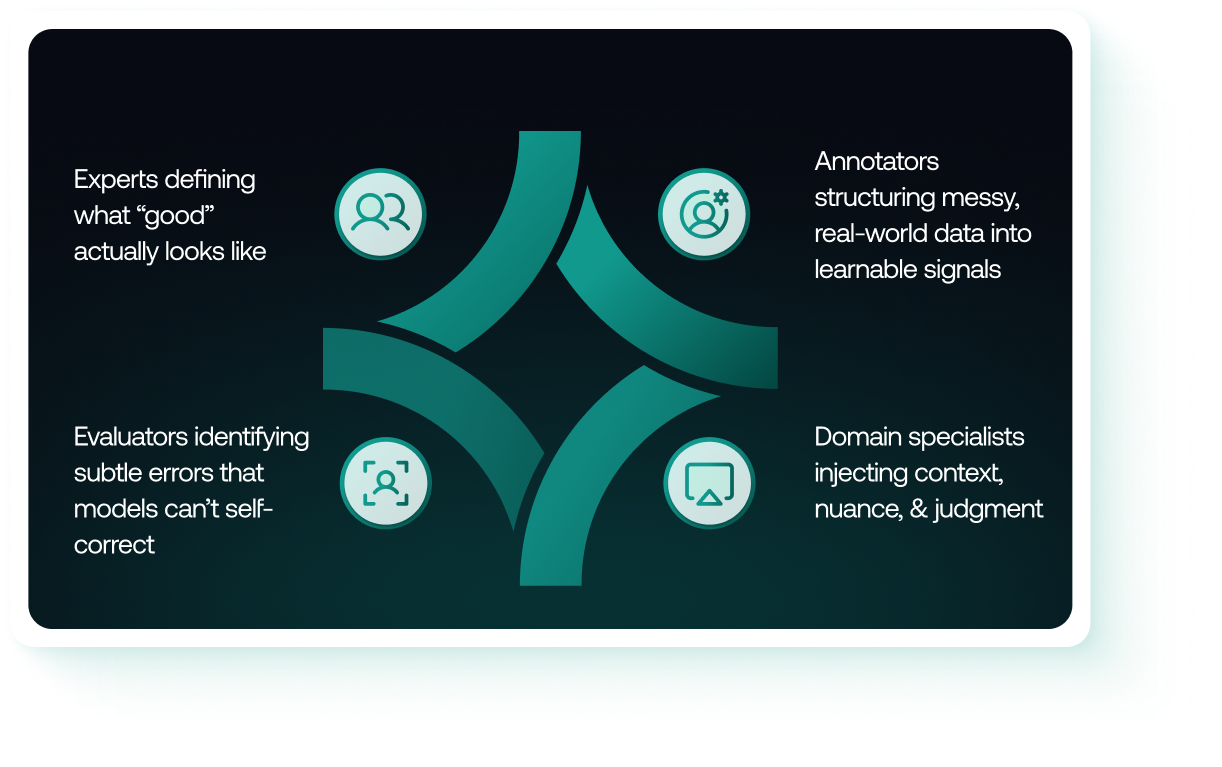
Strong AI systems are built through layers of human effort that rarely get attention.
Someone defines what “good” looks like in the first place. Someone structures messy, inconsistent data into something a model can learn from. Someone reviews outputs, spots subtle mistakes, and feeds that learning back into the system.
Domain experts bring context that models simply don’t have. They understand nuance, exceptions, and real-world complexity in a way that raw data cannot capture on its own.
All of this work shapes how an AI system behaves over time. It’s the difference between something that occasionally impresses and something that performs reliably.
AI and Expertise: A Force Multiplier
There’s a lot of conversation around AI taking over human roles. In practice, what’s happening feels more like an expansion of human capability.
Thinking Beyond Prompts
AI reflects the quality of thinking behind it. When the inputs are shallow, the outputs follow the same pattern. When experts are deeply involved, the system starts to handle complexity with far more confidence.
So the real leverage comes from the people guiding the system the ones deciding what to prioritize, what to refine, and what to improve.
The next wave of AI experts approaches problems differently.
They look at entire workflows instead of isolated outputs. They design feedback loops so systems can improve over time. They anticipate edge cases before they show up in production. They care about consistency across thousands of interactions, not just one impressive response.
Their focus is on building systems that learn, adapt, and hold up under pressure.
The Rise of Human-in-the-Loop Intelligence
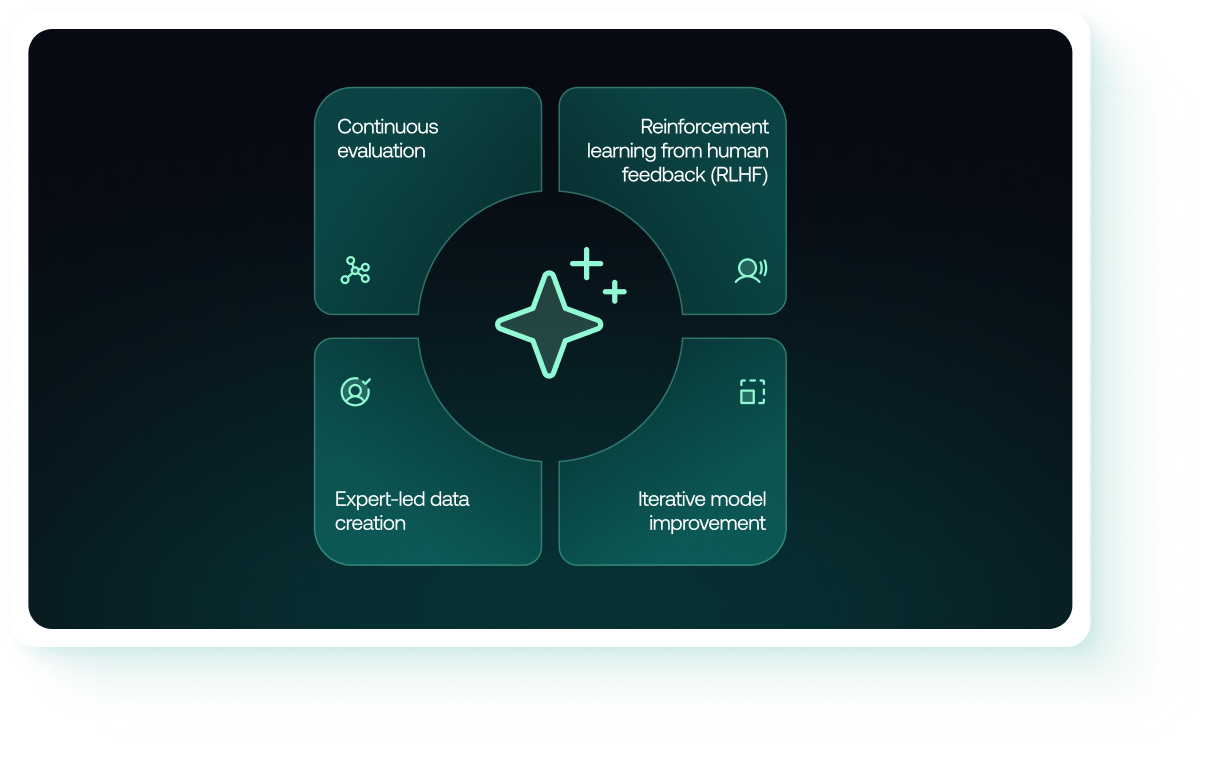
As AI systems become more capable, they also require more careful oversight.
That’s why leading AI teams are investing heavily in human-in-the-loop approaches:
- Continuous evaluation
- Reinforcement learning from human feedback (RLHF)
- Expert-led data creation
- Iterative model improvement
These practices help keep systems aligned, reliable, and grounded in real-world expectations.
Why the Top 1% of Talent Matters
When working with AI systems, small differences in judgment can have a huge impact.
Handling edge cases thoughtfully, applying domain knowledge correctly, and maintaining consistent standards across evaluations these are not easy skills to scale.
High-performing systems are shaped by people who bring depth, precision, and strong decision-making into the process. That’s why expert networks are becoming so important.
Humans × AI = Compounding Intelligence
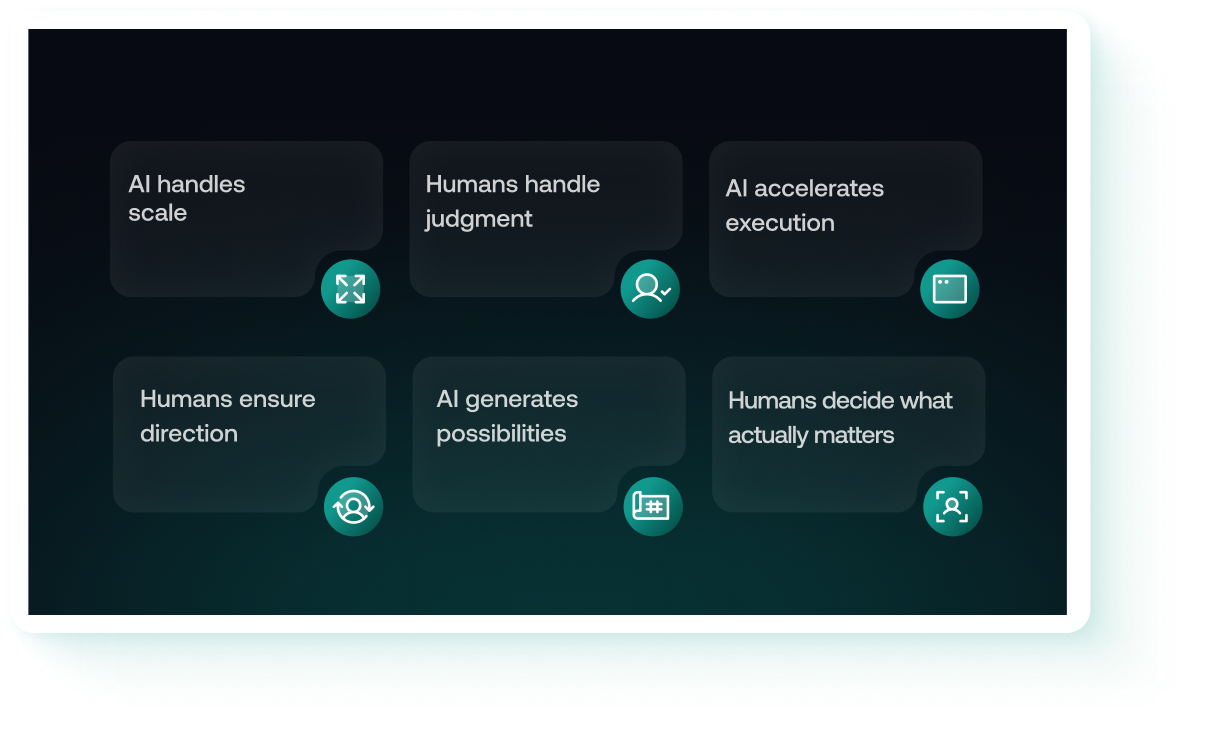
When humans and AI work together well, each side strengthens the other.
AI can process at scale and move quickly. Humans bring context, direction, and judgment. AI expands the range of possibilities. Humans decide which paths are actually worth pursuing.
Over time, this collaboration builds momentum. The system improves, the people refine it further, and the cycle continues.
The Deccan Experts Perspective
At Deccan Experts, the focus is on building strong human systems around AI.
That means bringing together people who think deeply about quality, who understand nuance, and who can guide how AI systems evolve in real-world environments.
The goal is to create a network of top-tier talent that actively shapes how AI learns and performs not just how it responds in the moment.
Because in this space, the biggest advantage comes from clarity of thought, precision in execution, and the ability to think in systems.
Final Thought
AI will continue to improve at a rapid pace. Models will become faster, more capable, and more accessible.
What will stand out is the ability to guide that progress with intention.
For anyone looking to build in this space, the opportunity goes far beyond prompting.
It lies in understanding how systems learn, how they evolve, and how human judgment can shape both.